
Flooring for Critical Operations
Surface Technology installs, inspects, and repairs the floors that food, pharmaceutical, chemical, and manufacturing facilities run on. We start with what the floor protects (your sanitation, safety, production time, and compliance) and plan the work around the operation, not the other way around.
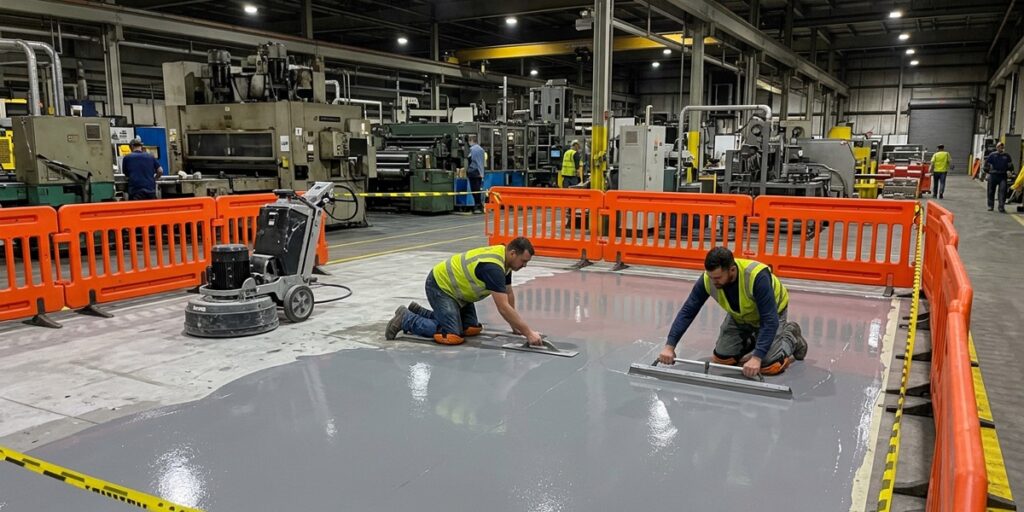
Your floor is part of how the plant runs
Most facilities think about the floor when it fails. By then the cost is somewhere else: a sanitation finding, a slip, a forklift wheel through a spalled joint, an area taped off in the middle of a run.
We treat the floor the way your maintenance team treats a pump or a conveyor. It is critical surface infrastructure. It has a service life, failure points you can see coming, and a right time to repair or replace it.
“What happens to your operation if this surface fails?” That is the first question we ask on every site.
Surface Technology
Project lead, every site walk
Where floor failures show up
Sanitation
Open joints, cracks, and failed coves hold water and residue. In food and pharmaceutical areas that becomes a finding.
Safety
Worn texture, ponding water, and broken edges cause slips and trip hazards, and they damage equipment.
Production time
An emergency repair takes the area out of service on the floor’s schedule, not yours.
Compliance and containment
Chemical areas and containment structures have to hold. A failed lining is an environmental problem, not a cosmetic one.
From assessment to renewal
1. Assess
We walk the facility before anything is specified: the substrate, the moisture, the drains and slopes, the coves and joints, the traffic, the chemicals, and the cleaning program.
2. Specify
We match the system to each zone. Urethane cement where hot washdown and thermal shock are the risk. Epoxy where abrasion and forklift traffic are. MMA where the floor has to be back fastest. ESD where static is the hazard.
3. Install
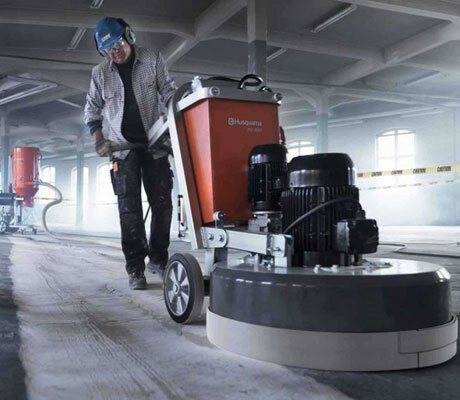
We plan preparation, material, and crews around your shutdown window, including nights, weekends, and holidays. We prepare the concrete with Blastrac shot blasting and diamond grinding, and test for moisture before anything goes down.
4. Inspect
We come back to look at the floor in service, with yearly site visits under our warranty.
5. Maintain
We plan recoats and touch-ups before wear becomes failure.
6. Repair
We fix damage before it spreads or takes an area out of service.
7. Renew
We help you plan the next floor around your capital schedule, so replacement is a project, not an emergency.
Built for shutdown windows and the calls nobody plans for
Planned shutdowns are short, and every trade wants the same week. We plan the floor so it fits: preparation sequenced around equipment work, the system chosen for its cure time, and crews scheduled through nights and weekends so the area is back in service when production restarts.
When a floor fails without warning, Surface Team Six™, our rapid-response crew, handles urgent repairs and short-notice shutdown work. They have worked in secure and limited-access facilities and on projects other contractors could not take on.
Recent examples:
- Food facility, new construction: 10,000 sq ft in a 7-day holiday window
- Working bakery kitchen: back in business in 4 days, installed over a weekend
- Port logistics warehouse: 40,000 sq ft, in service 24 hours after completion
Start with a Critical Surface Onsite Assessment
After the first conversation, the next step is often a walk of the facility. A Surface Technology project lead looks at the areas you are worried about and the ones you have not had time to check, and tells you what they see.
What the walk looks at:
- Surface and substrate condition
- Joints, transitions, and cracks
- Drains, slopes, and coves
- Containment areas
- High-wear and high-traffic zones
- Sanitation and safety risks
What you come away with: a clear view of where the floor is likely to fail, which areas to fix first, and which can wait. For suitable facilities, a preliminary condition review is complimentary. A detailed survey, photo report, testing, or multi-year capital plan is scoped and agreed with you first.
Already have a Surface Technology floor?
Floors we installed years ago are now due for a look. If you want a condition review, a recoat, or help planning a replacement, call us or use the form and tell us where the floor is.
Common questions
What makes a floor “critical”?
A floor is critical when its failure stops production, creates a sanitation or safety problem, or puts compliance at risk. In food, pharmaceutical, chemical, and manufacturing plants, that usually means processing areas, washdown zones, containment, and the main traffic routes.
Can you install a floor without shutting down our plant?
Usually, yes, if we plan it around your schedule. We work nights, weekends, and planned shutdowns, phase the work area by area, and choose systems by cure time. Some MMA systems cure in about an hour per coat, and most systems accept traffic within 24 hours at 70°F.
What happens after the first conversation?
A project lead talks through the facility, the area, and your timing. If a site walk makes sense, we schedule a Critical Surface Onsite Assessment so we can see the conditions before recommending a system.
Do you repair floors other contractors installed?
Yes. Much of our work is fixing failed coatings and floors installed by others. We remove what has failed, repair the substrate, and install a system matched to the conditions that caused the failure.
Do you work outside Pennsylvania?
Our primary service area is within about 100 miles of Lancaster, PA, which covers central and eastern Pennsylvania, Maryland, Delaware, and much of New Jersey. We take on selected projects up to about 300 miles away and strategic projects for multi-site operators beyond that.