
Flooring for Data Centers and Mission-Critical Facilities
In a mission-critical facility, the floor has to protect equipment, stay clean, and never become the reason for downtime. Surface Technology installs and repairs seamless, static-control, and containment floor systems and plans the work around live operations, maintenance windows, and shutdowns.
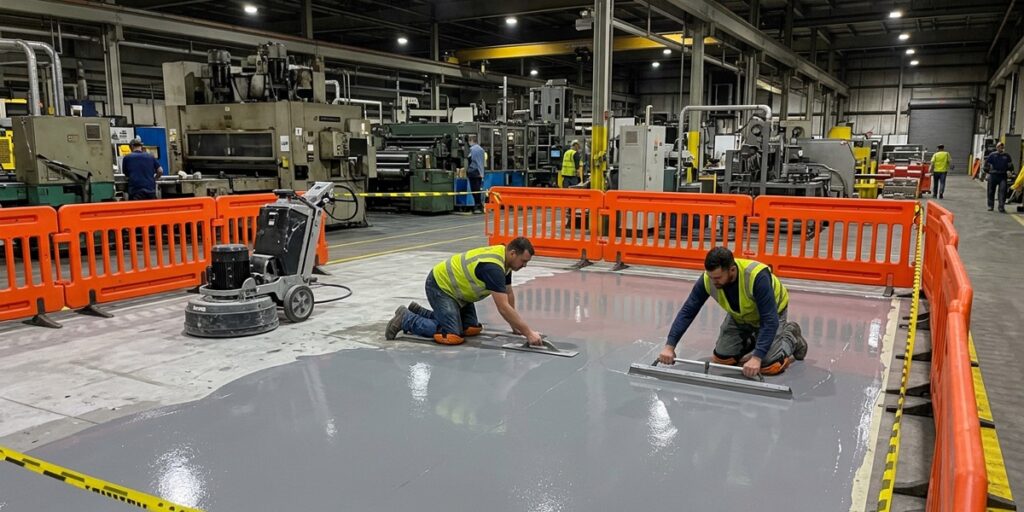
What the floor protects
Data halls, electrical rooms, battery and generator areas, and mechanical plants share one problem: the floor sits under the equipment that cannot stop. Bare concrete sheds dust that reaches air handling and servers. Static builds where equipment is handled. A leak or spill in a battery or fuel area has to be contained.
A floor repair in an operating facility is harder than the install, because the work has to happen around equipment, access rules, and a maintenance window that does not move.
Where floors fail in these facilities
- Dusting concrete in data halls and support areas
- Static-sensitive areas where equipment is handled
- Battery rooms and areas exposed to electrolyte
- Generator and fuel areas that need containment
- Cracks and worn coatings in mechanical rooms
- Transitions and joints in high-traffic corridors
Matched to the room, not just the building
Static control where equipment is handled
ESD (electrostatic dissipative and conductive) floor systems control static in areas where electronic equipment is staged, serviced, or installed. We select the system for the area and the way the equipment is handled.
Dust control and cleanability
A sealed, seamless resin surface stops concrete from dusting and gives maintenance teams a floor they can clean.
Containment and chemical resistance
Battery, generator, and fuel areas can need chemical-resistant systems and secondary containment so a leak stays where it started.
Different areas, different systems
We look at what each area sees, then choose the system.
Data halls and white space
Static control and a sealed, low-dust surface, planned around live equipment.
Staging and equipment handling
ESD flooring where equipment is unpacked, built, or serviced.
Battery and UPS rooms
Chemical resistance and containment for areas exposed to electrolyte.
Generator and fuel areas
Containment and chemical-resistant systems for fuel and oil.
Mechanical and electrical rooms
Durable, cleanable coatings that resist wear and oil.
Loading docks and corridors
Impact and abrasion resistance with slip-resistant texture.
Installed around live operations
1. Walk the area
We review conditions, access rules, equipment locations, and the maintenance window with your team.
2. Plan the work
We phase the area, set up barriers and dust control, and sequence preparation and curing around your schedule.
3. Prepare and install
Shot blasting or diamond grinding with dust control, moisture testing, then the system and details.
4. Hand back
We return the area to you on the date you set and plan inspection and maintenance with your team.
Experience inside operating facilities
Surface Technology has installed and repaired industrial floors since 1988, including inside operating facilities where production could not stop. We bring that planning discipline to mission-critical environments: phased work, controlled access, and a hand-back date you can plan around.
If you are planning data center or mission-critical work, tell us about the area and the window. A project lead will talk through the conditions and what the floor needs.
Data center and mission-critical flooring questions
What type of flooring does a data center need?
It depends on the area. Data halls and equipment staging areas often call for static-control (ESD) floors and a sealed surface that does not dust. Battery and generator areas can need chemical-resistant systems and containment. We specify by area after we see the conditions.
Can you work in an operating facility?
Yes, with planning. We phase the work, control access and dust, and schedule around your maintenance windows and shutdowns. The plan depends on the facility and its rules.
Do you install ESD flooring?
Yes. Conductive and static-dissipative systems are available for areas where static control matters. We select the system based on the area and how equipment is handled.
Can you repair a floor in an area that is already live?
Often, in phases. We look at the area, the access rules, and the window, and plan the repair so the rest of the space keeps running.
What happens after the first conversation?
A project lead talks through the facility, the area, and your timing. If a site walk makes sense, we schedule a Critical Surface Onsite Assessment before recommending a system.